In today’s world of digital photography, the old saying “the camera does not lie” might be true, but it is what happens after the photograph is taken that can really make a photograph tell a lie.
Whilst there are many good reasons to correct elements of a photograph, like remove a distraction, correct the levels and remove a colour cast, there are some people who take the art of digital image manipulation too far, for one reason or another.
In an article in Newsweek magazine, people complained that up to 95% of images of top celebrities have been manipulated, in some way.
In this first example, the retoucher has gone too far on the model, and this has resulted in a very long, unnatural looking, neck:

The next example is from the Los Angeles Times from March 2003
In this example, entitled Soldier in Basra, elements from two photographs were used to create one:
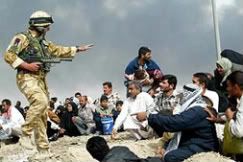
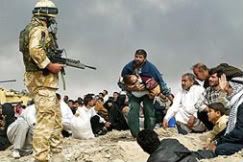
Original photos
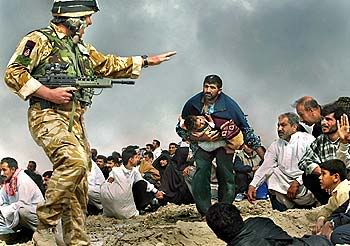
Published photo
Here the photographer Brian Walski was fired from his position at the Los Angeles Times after it was discovered that two news photographs of a gun-toting soldier had been combined to create a more intense photo. When later asked why he had digitally manipulated the photo and risked his career Brian replied: "I knew what I was doing. It looked good. It looked better than what I had, and I said 'wow.'"
Another example features Condoleezza Rice, in the USA Today website in October 2005:
 Original Photo
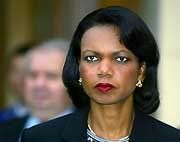
Published photo
An Associate Press photo that appeared on the USA Today website showed then Secretary of State Condoleezza Rice with unusually menacing eyes, a result of too much retouching, where the whites of the eyes have been too strongly whitened. Some questioned whether the effect had been created deliberately as it was difficult to easily replicate. The offending photo was quickly removed and replaced with a version much closer to the original and an apology from the paper's photo editor.
Finally, in the magazine photograph, do you spot something wrong (or familiar) ?

Here people from one area of the crowd have been copied and flipped horizontally, to make the crowd even larger. Closer examination may find more duplicating !
The moral of the story is to use Photoshop (or whatever program you use) carefully. Don’t mis-represent someone or something.
Always remember you can use Photoshop to make you look better on facebook, for someone to look at, but if they see you for real,
Photoshop cannot help you !

No comments:
Post a Comment